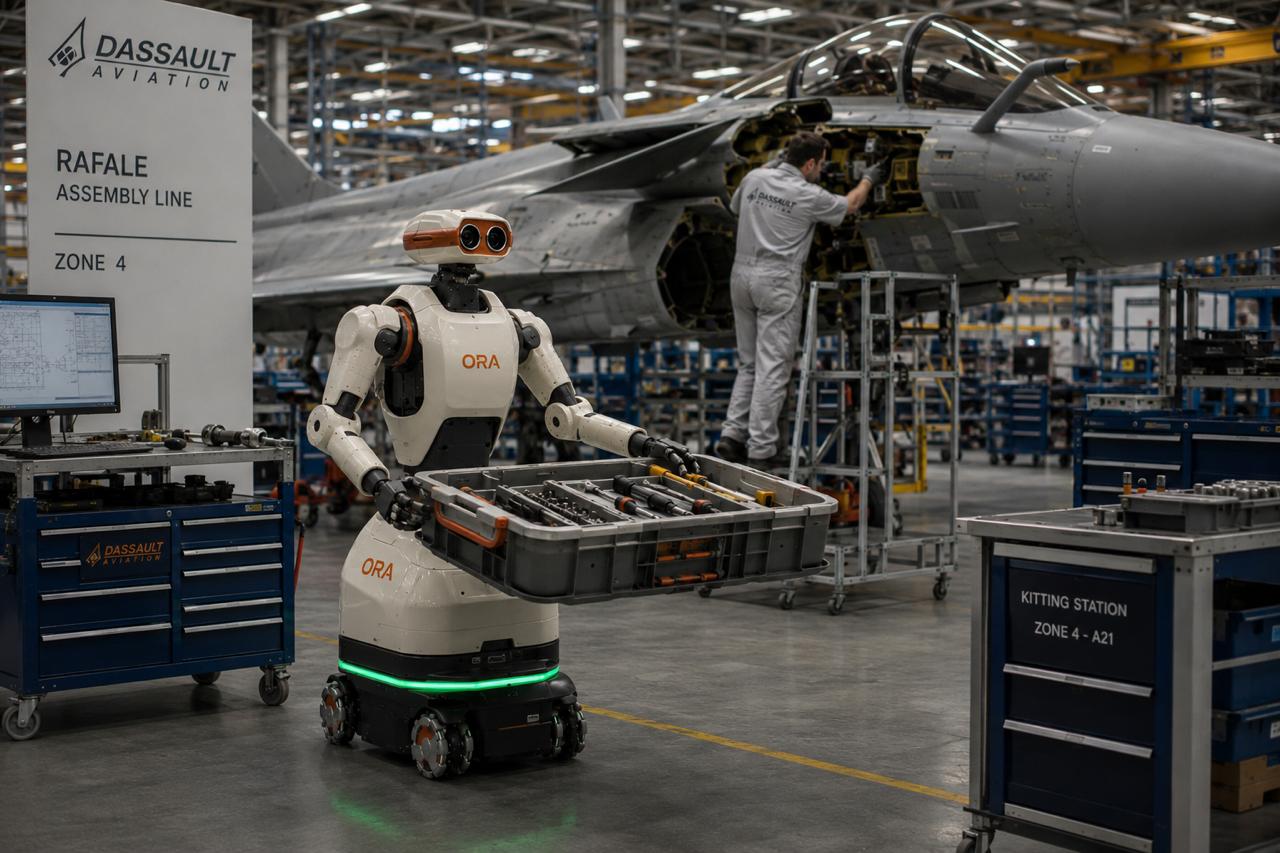
The robot
The mobile base.
We made a simple choice: rather than a complex, fragile humanoid, a wheeled platform with two arms. It delivers bimanuality, the ability to hold with one hand and act with the other, without the cost, fragility and safety constraints of legs.
Four design choices
{{ c.title }}
{{ c.text }}
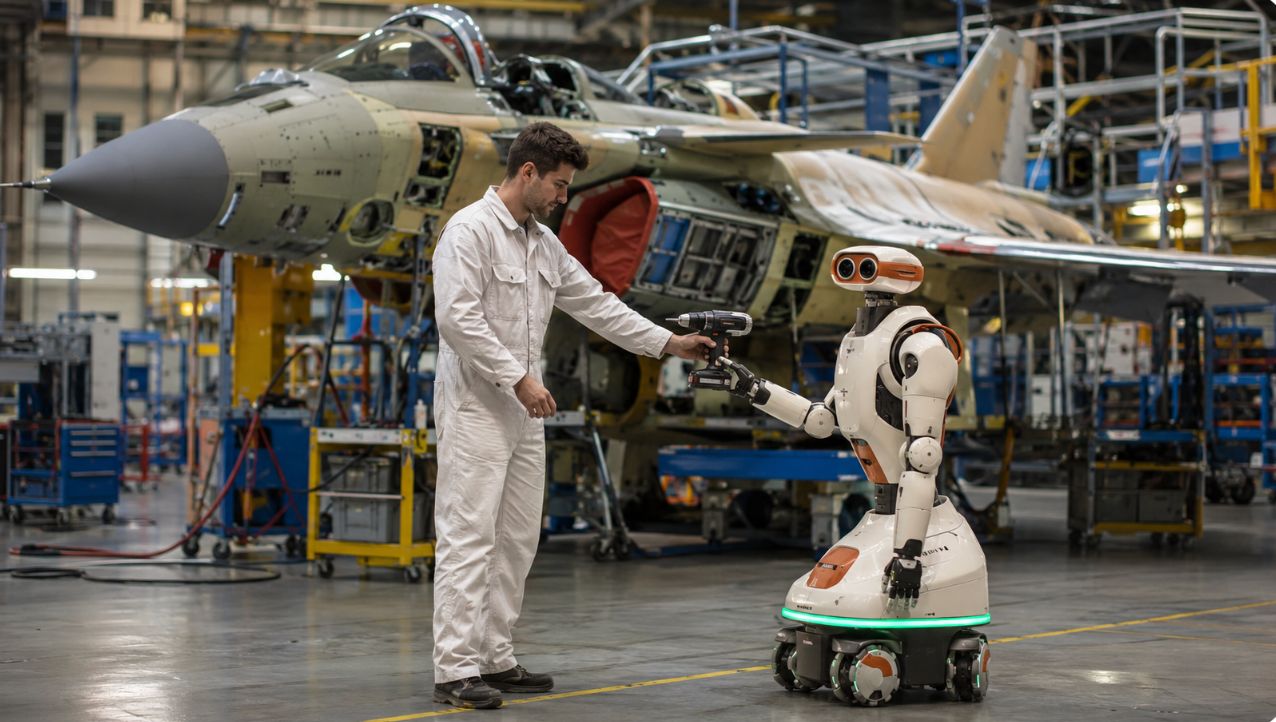
Reduced speeds near people, emergency stop, obstacle detection and exclusion zones defined with the site. On loss of link, the robot stops, it never continues a motion on its own.
What it does
One machine, many missions.
The mobile base does not change hardware to change task. Here is some of what it does, the list is open.
{{ m.title }}
{{ m.text }}
Where it serves
Anywhere there are trips, objects and checks.
Moving among people, grasping, observing, reporting: this foundation belongs to no single sector. We start with industry and logistics, where needs are densest, but the platform reaches far beyond the factory.
How it is operated
Deployment, teleoperation, autonomy.
The robot does not wait to be autonomous before going into the field. It goes first, remotely piloted by our operators, and it becomes autonomous because it has been there.
{{ st.title }}
{{ st.text }}
Data & models
The robot learns by working.
While it is piloted, the robot records: what it sees, what it does, and how the operator goes about it. These gestures, captured on real sites and not reconstructed in a lab, train our models.
{{ d.title }}
{{ d.text }}
What's next
What we are building.
More robots in the field, more missions per robot, and a growing share of those missions run with no human intervention. Each deployment makes the next one faster to commission and broader in what it can do.